Fall 2026
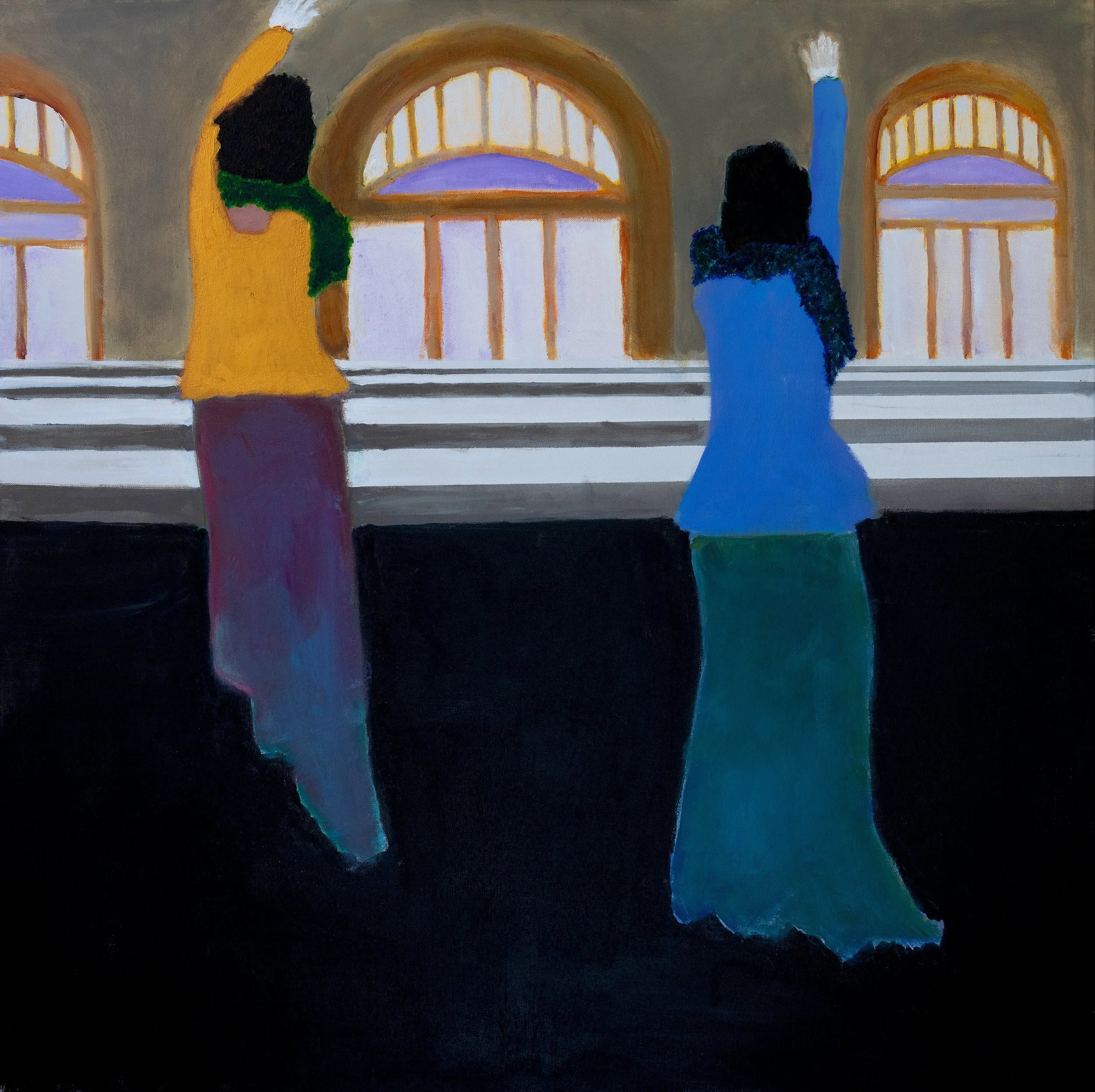
Pianissimo, 2026
Acrylic on Canvas
40 × 40 in
September 21st, 2026
I want to start off with a declaration. I received a note from one of the people who received my last few Seasonal Letters suggesting that I must have used artificial intelligence because they “were so good.” I appreciated the compliment but certainly not the implication, and I want to be absolutely clear that not only did I not use artificial intelligence on those, or any other letters, but I have not yet used AI in any context at all beyond for that which I had previously used Google search, and don’t intend to do so anytime soon. I understand the arguments against my position, and perhaps in the end I will wind up in the role of the stubborn carriage-maker as the Age of the Automobile arose, but as an artist I am dedicated to insisting on the human touch and can only hope that our society continues to value that above the alternative. Can Claude write a better letter than I? Perhaps at some point, but I’d like to think not. In any case, you who continue to read these missives, and see my art, will have to settle for me, with all my human hopes and foibles. At least no one will worry that I might be plotting to end human life on this planet! A last note on Artificial Intelligence: It is an iron law that once any technology is developed it will be used and any attempt to completely control it is almost certain to fail. I think the talk of the United States and China agreeing to monitor and make failsafe the development of general AI is a sideshow because there will be many groups around the world who will seek to use it to gain wealth and power and will not feel constrained at all. We cannot ban it because the cat is already out of the bag. We cannot regulate it because the regulators will find it almost impossible to see into every nook and cranny and data center around the world. I think in the end the only defense we will have against AGI eventually trying to escape our control and potentially acting as our enemy and executioner is the control of electricity. Available power is to AI as food and water are to us. Without it there can be no life. Of course, we need electricity to support modern life. But I foresee a plan whereby we will monitor for rogue AI models and when we find them we will shut down their power supply and divert those electrons elsewhere. We will need tools that enable us to trace those rogues back to their data center source and then cut off their food. This won’t be easy, and I hope someone comes up with a better plan. But any plan that depends upon peoples’ wisdom and concern for their fellow inhabitants of this planet is highly unlikely to work. As James Madison said, “If men were angels no government would be necessary”.
I’m not going to write about 9/11 because so many others have done so, and so well. I’ll just say three things: 1) That day is the birthday of my wife, Lila, so I still find it a date of both celebration and mourning; 2) The 9/11 Memorial in Manhattan is beyond profound and deeply moving and should be visited if you’ve not done so; and 3) Jack Whitten’s piece “9.11.01” is in my opinion the best “in memoriam” painting ever done, and I’m including the work of Picasso and Goya in that assessment. If you get a chance to see it make sure you do.
On a happier note, over the past three months I have had the wonderful experience of being included in three art shows. The first was a terrific group show mounted at Hollis Taggart in New York. I really admire Hollis, Paul Efstathiou, and Eleanor de Ropp Flatow, the triumvirate who run this wonderful pair of spaces for a gallery that dates to Hollis’ initial showings in 1979. This show sprinkled a few contemporary artists in with a good number of excellent artists from the 20th Century including Sam Gilliam, David Park and Andy Warhol. The second was a show done by the Ogunquit Museum of American Art that included my painting Fire on the Water that they acquired earlier this year. It was a beautifully mounted show, curated by the dynamic Devon Zimmerman, which remains up through early November if any of you traveling in Maine as we drift into autumn would like to see it. The third was another wonderful group show at Eighteen Gallery in Copenhagen, curated by Marcus Jahmal and mounted by the two gallerists (Mikell Groennbaek and Jesper Elg) who together have been the prime movers in what has become a very vital and exciting art “scene” in Scandinavia and particularly in Denmark. I think nearly every artist hopes to have many people see his/her work and enter into dialogue with it and hopefully be elevated by that experience. So being included in three shows that have run almost simultaneously over the course of this summer has been pretty exciting for me.
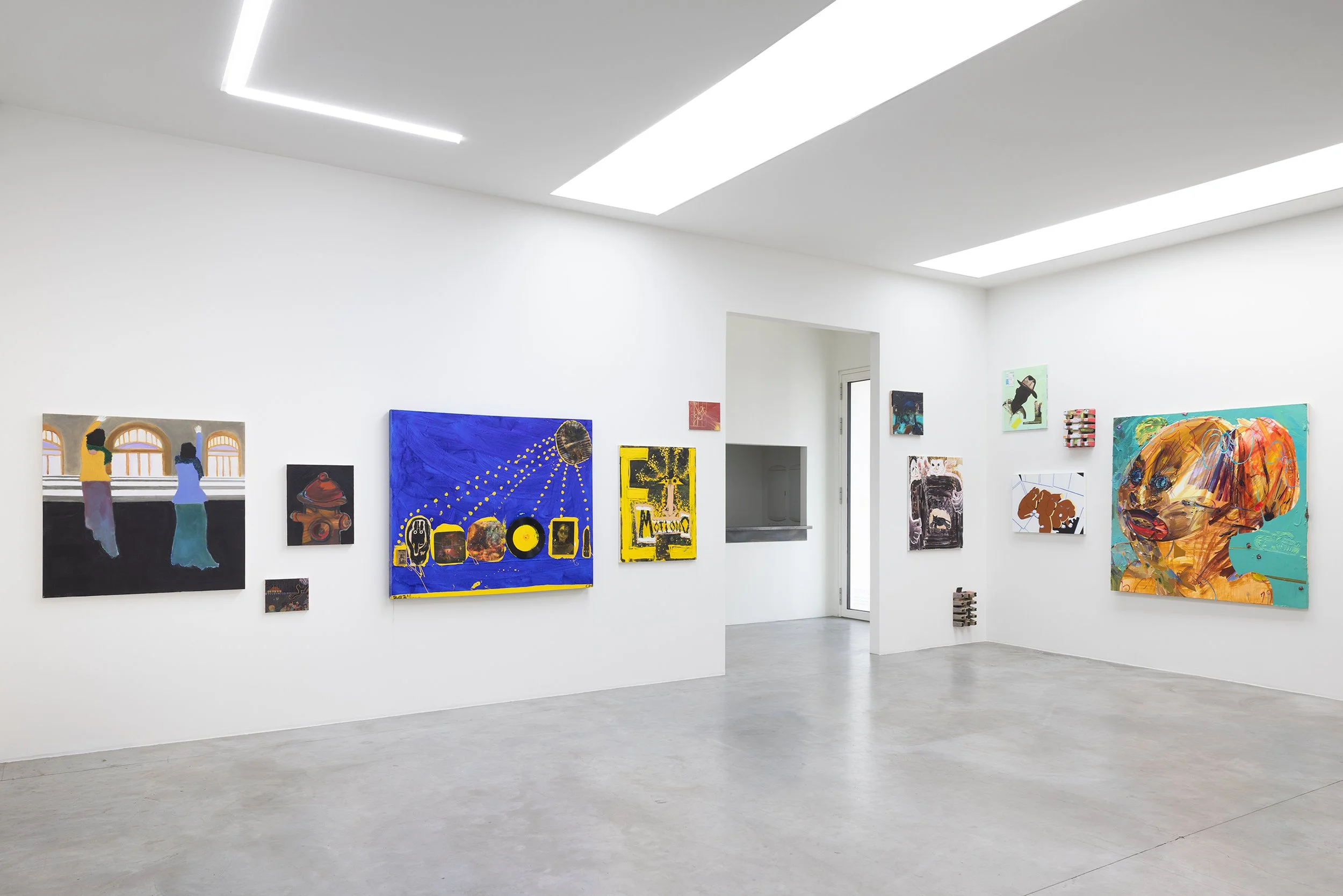
Install of Late for the Opera, 2026 (far left) as part of “Playing” at Eighteen Gallery in Copenhagen.
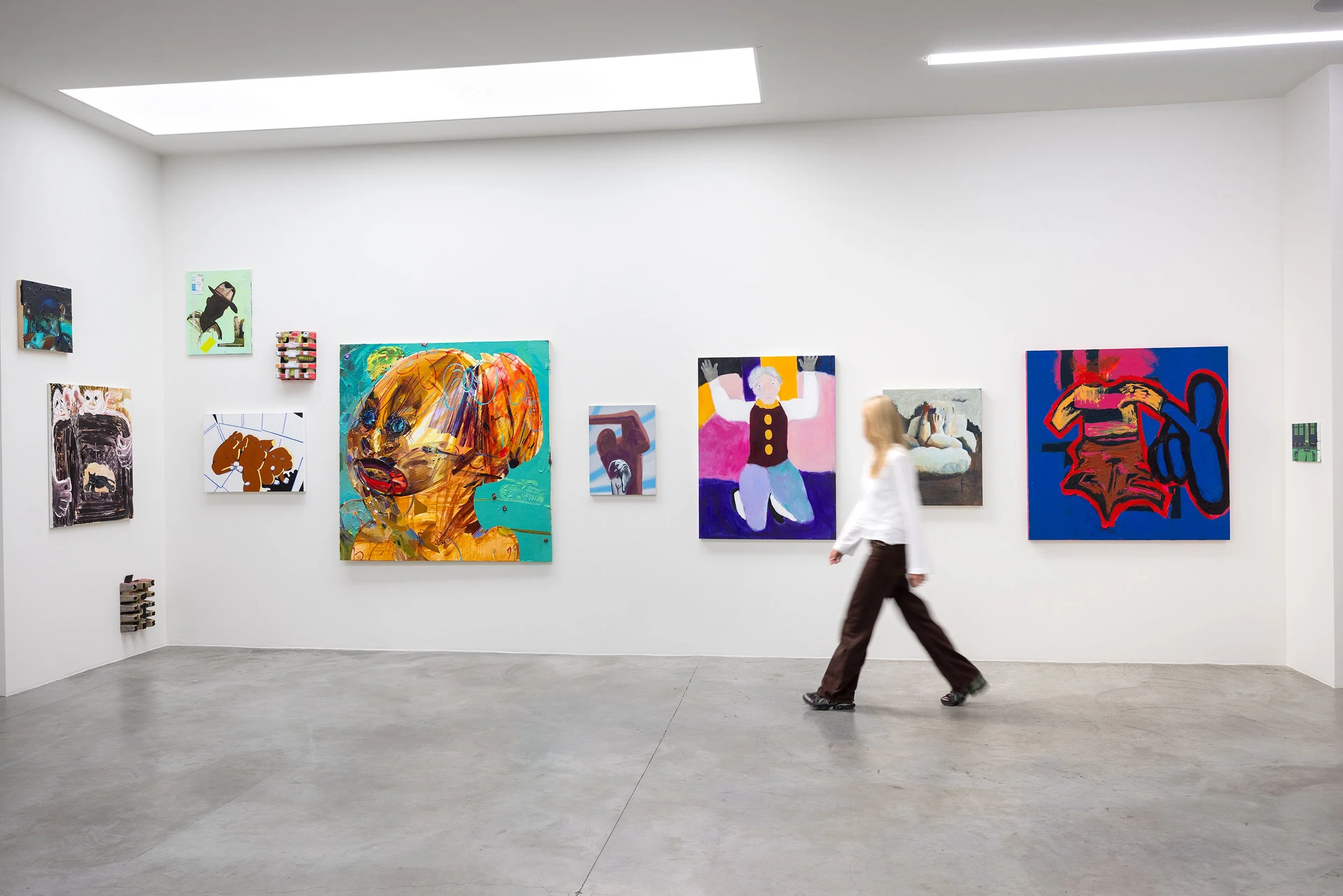
Install of Arrest of the Card Sharp, 2026 (center)
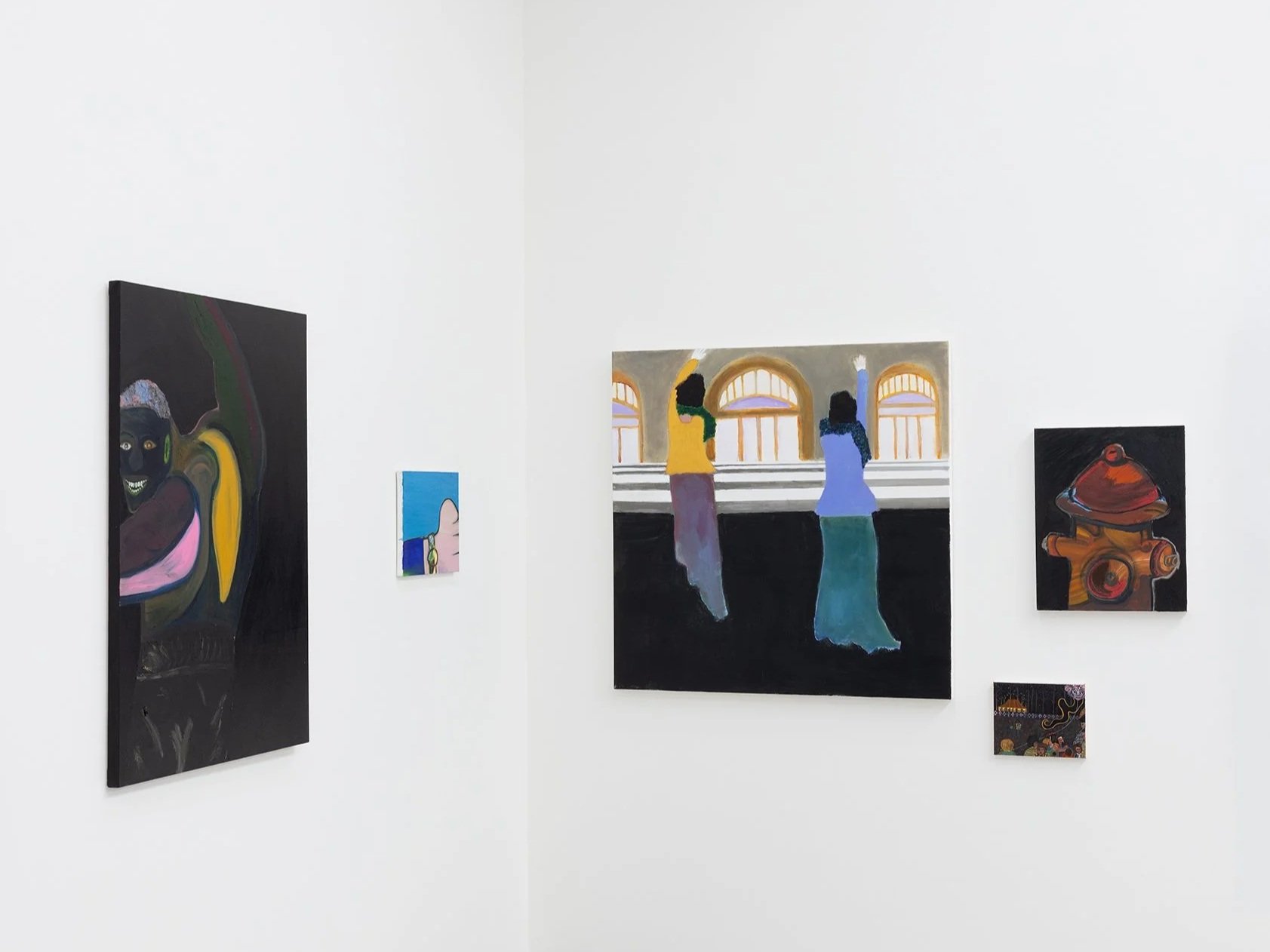
Install of Late for the Opera, 2026 (center)
I used the excuse of the opening of the Copenhagen show to take parts of my family on a Scandinavian trip to Norway, Sweden and Denmark. It was a wonderful trip, enjoyed by everyone (even my 12-year-old granddaughter, who caught an enormous fish in the Norwegian fjords and made a couple of interesting artworks in one of the museum workshops while I toured the galleries). I was last in Scandinavia while hitching through Europe in 1968 (writing that down startled me and reminded me that while I may still feel young-at-heart, I’ve seen many autumns like the one we’re now entering). I came away from the trip very impressed with three things in particular: first, there are an awful lot of tall, blue-eyed Norwegians who clearly are direct descendants of the Vikings; second, the Meatpacking District of Copenhagen is one of the “coolest” neighborhoods in the world; third, throughout Scandinavia there is a “trust” factor that sadly we seem to have lost in the United States. In Oslo, Bergen, Copenhagen and Stockholm almost no one locks their bike when they leave them on the sidewalk outside their destination. We saw expensive strollers and baby carriages left outside entry doors. My daughter left her passport on a plane and when she went to reclaim it from SAS Airlines they took a look at her, then her photo on the passport, and handed it over without any elaborate proof of identity. I’m not going to naively conclude that everything is wonderful in Scandinavia. There is an undercurrent of unhappiness about excessive immigration and the lack of interest in many Muslim immigrants in assimilation, and about the reduction in some government-initiated economic benefits in Denmark and Sweden that can no longer be afforded. The Norwegians fight among themselves about the morality of using their vast oil income to support a very good welfare state when they are very concerned about the environment and global warming, but the argument that continuing to build up the sovereign fund (Norges) through oil earnings that support all Norwegians and their descendants (they only spend 1% per annum of the vast wealth counted in the trillions that they have used to become the largest investor on the planet, so continue to grow Norges as it pumps out annualized returns of 7-11%) has won out. The Scandinavian cultures are incredibly attractive, people seem to find dignity in whatever kind of work they are doing, and while their taxes are quite high, the fact that they get reasonably strong cradle-to-grave support from the state (although, as noted above, outside of Norway their welfare systems are under some degree of strain and they are looking for ways to encourage growth and looking to the U.S. for hints at how to do so) appears to allow for a baseline of strong satisfaction with their lives and a quiet patriotism. We could learn a lot from them.
At the end of August we lost a true American icon, Dolly Parton. I’m sure you’ve all read plenty about her, and many of you are more than likely more familiar with her entire career than am I. I do, though, admire her story, love her voice, and can say with certainty that had she only written “I Will Always Love You” and “Coat of Many Colors” and done nothing else she would deserve a place in the American Artists Pantheon. Even more important, she was kind, and she accepted and honored people of all persuasions and backgrounds. Probably much of that stemmed from her hardscrabble childhood in the Tennessee hollers in a shack with no toilet or running water but there’s little doubt that it also came from a combination of her religious beliefs and her inherent goodness. She cared about everyone and made that clear. She helped where she could. If you know me you know that one of my core beliefs that I hope can be seen in my painting practice is a commitment to Tikkun Olam, an obligation to repair a fractured world. Dolly Parton may never have heard that phrase but she lived it. In an age where we are surrounded by meanness and selfishness among so many of our supposed leaders in politics, academia, media, culture, business and almost anyplace else you can name, that woman stood in opposition. About a year ago I wrote about my vast admiration for Victor Navalny and how he would always be a hero of mine. To many it would seem strange to pair him with Dolly Parton, but she too, is my hero. That people like those two exist should give us all hope, joy, and gratitude.
I am currently going through a truly humbling experience as another NFL season commences. You see, I am a fanatic in regard to the New York Football Giants. I’ve been rooting for them for over 70 years, went to many games with my father, and then my son and spouse, have fabulous season tickets, took my son to Indianapolis for a week so we could see the Giants play and beat the New England Patriots in the Super Bowl in February of 2012, and am looking forward to taking a variety of grandchildren to games in order to extend the family tradition of rooting for the Giants, the Knicks of the National Basketball League, and the New York Yankees. Just as art can connect people through time and space, so too can sports. Every time I take a member of my family to one of these teams’ games I take a minute to remember my father taking me and I hope we are properly honoring his spirit. But not long ago a study was published that looks pretty definitive and states that at least 21% of those men who have played in the National Football League will suffer at some point from Chronic Traumatic Encephalopathy (CTE), a degenerative brain disease that eventually causes memory loss, movement issues, and frequently dementia, and that is caused by frequent blows to the head (obviously inherent in the sport of football). So I have to decide if, knowing that, it is still possible to be a football fan, and a passionate one at that. Honestly, I think I may be so hooked on the sport that I will continue to be a fan and attend plenty of games, even while knowing that doing so seems unconscionable. It has made me think a lot about moral compromises and how difficult many decisions (most far more consequential than this one) are for so many people, and how quick we are to judge others without knowing the context of their decisions. The “context” in my case is that not only do I love the sport but that it has acted as a strong intergenerational connection in my family that I have always thought of enormous value. In any case, the fact that I will probably continue to go out to the stadium and passionately root for the Giants, and bring children and grandchildren along to bind that connection, certainly makes me less than a paragon of virtue. I’m embarrassed by what I suspect is a wrong decision (the argument in favor of the NFL despite this new evidence is that the players get paid a lot of money and they knowingly and willingly sign up to play, so who are we to say they should not or cannot?). I’m reminded of just how far I am from my ideal self.
I cannot give you many specifics about my activities this winter but I have been asked to do a solo show in San Francisco that I am contemplating, and I will be in a special two-artist show at the Hollis Taggart downtown gallery (109 Norfolk Street, New York, NY) from January 7-February 6 paired with Sheila Isham, whose work was the subject of a major museum show in Newport earlier this year. I’ve been invited to do a solo show in Paris sometime in the spring or autumn of 2027. I hope to see many of you at one show or another.
I cannot end this letter without mentioning that my son, Ben Stillman, and his production company Further Adventures, has released a truly outstanding movie, If I Go Will They Miss Me, that I recently saw at the Angelika Theater in New York City. It is a triumph. Poetic. Humane. Beautifully shot. While it’s about a family that comes from a place radically different from my background, both I and all of my family and friends who have seen it were blown away by how much we could relate to the big questions the movie poses. It has been very favorably reviewed by multiple sources including Roger Ebert and had a 96 rating on Rotten Tomatoes as of last week. It has been picked up by HULU and will be available to stream at some point but I urge you to go see it in a theater if it is available near you. Ben has been responsible for some wonderful films over the course of his career, among which were The Imitation Game (about Alan Turing, breaking the Enigma Code and Bletchley Park during WWII) and Barry (not the television show, the film about Obama’s time at Columbia when he was struggling with his identity). I think this new one ranks with them among his best.
Let’s all enjoy the cooling off after a pretty brutal summer in most parts of this country and Europe.
Regards,
Abbott Stillman